
Data Governance
Data Governance Isn't a Compliance Checkbox It's the Foundation of Every AI Project
14 Apr, 2026|7 min
Bad data doesn't just produce bad AI outputs it quietly kills projects before they reach production. This article explains what a practical data governance framework looks like for an Australian mid-market organisation, from data classification to streaming pipeline hygiene to BI dashboard trust.
Introduction
Ask most organisations what their data governance framework looks like, and they'll point to a policy document. A data classification register, maybe. A privacy notice. A set of rules about who can access what. That's compliance governance. It matters, but it's not what we're talking about here. The data governance that determines whether an AI project succeeds or fails is operational governance the practices and systems that ensure the data flowing into your AI is accurate, current, consistently formatted, and trustworthy. Without it, you don't have an AI problem. You have a data problem that AI makes visible.
Why data quality kills AI projects
AI systems are pattern-matching engines. They find structure in data and use that structure to make predictions, generate outputs, or take actions. The quality of those outputs is directly proportional to the quality of the data inputs. This is not a subtle relationship. An AI model trained or operated on inconsistent, incomplete, or outdated data will produce outputs that are inconsistent, incomplete, or based on outdated assumptions. And unlike a human analyst who might notice that a dataset looks wrong, an AI will process bad data confidently and at scale. By the time the outputs are visibly wrong in production, the damage is often already done in decisions made, records updated, and trust lost with the people who were supposed to benefit from the system.
What operational data governance actually covers
The first component is data classification. Not every piece of data needs the same level of governance. Understanding which data is sensitive, which is business-critical, and which feeds directly into AI models allows you to apply the right controls in the right places without creating unnecessary overhead everywhere. The second is pipeline integrity. Data moves from source systems into your AI through pipelines ETL processes, API feeds, streaming connections. Each of those steps is a place where data can be transformed incorrectly, delayed, duplicated, or lost. Operational governance means monitoring those pipelines, setting quality thresholds, and failing loudly when data doesn't meet them, rather than passing corrupted data through silently. The third is data lineage. For any AI output, you should be able to answer the question: where did the data that produced this output come from? Data lineage tooling makes this traceable, which matters both for debugging when something goes wrong and for compliance when someone asks. The fourth is a data quality framework. This means defined standards for completeness, accuracy, consistency, and timeliness and automated checks that enforce those standards before data reaches the AI layer.
The BI dashboard question
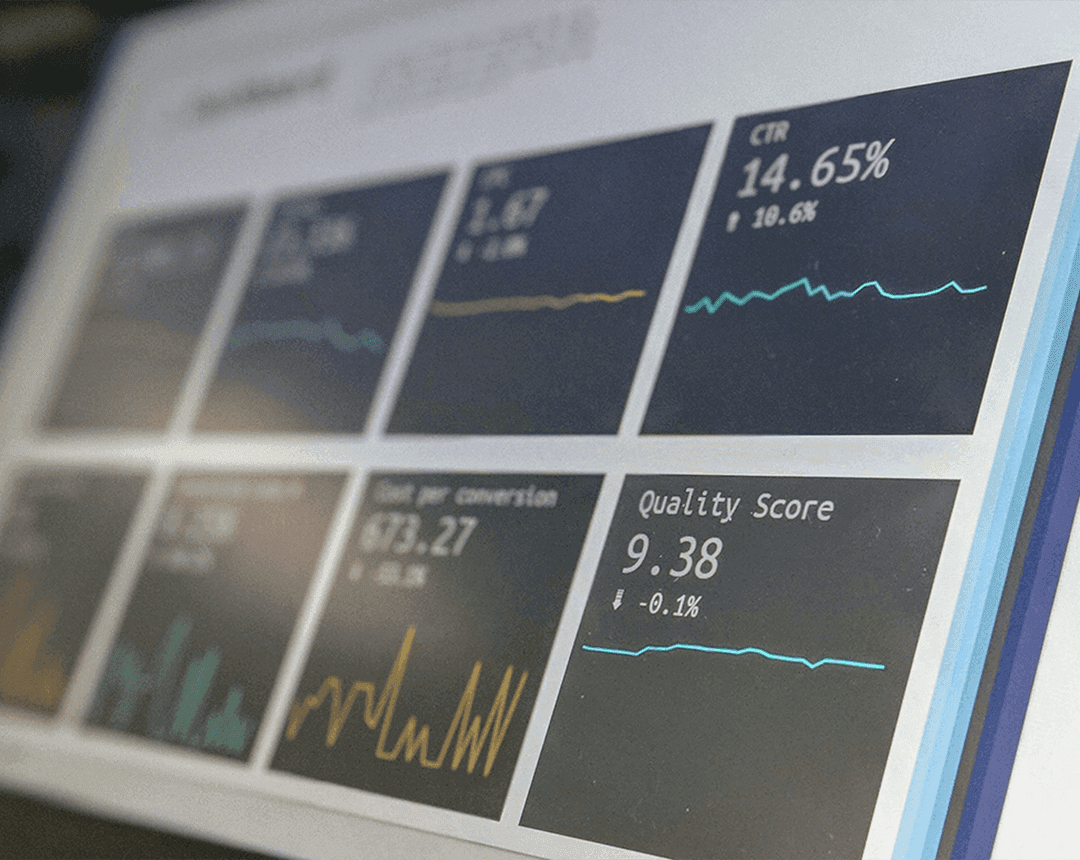
One of the most common entry points we see for data governance work is a BI dashboard project. An organisation wants better visibility into their operations, builds dashboards, and then discovers that the underlying data is too inconsistent to trust. The dashboard numbers don't match the spreadsheets. Different teams are looking at different versions of the same metric. This is the moment when operational data governance becomes impossible to avoid. The dashboard made the problem visible. Now it has to be solved. The good news is that the work required to make a BI dashboard trustworthy is very similar to the work required to make an AI system trustworthy. Solving it once, properly, pays dividends across both.
Where to start
If you're planning an AI project and you haven't done a data audit, start there. Understand what data your AI will depend on, where it comes from, how it gets there, and what happens when it's wrong. The audit will tell you what governance work is needed before you start building. If you already have an AI project underway and outputs aren't trustworthy, a data audit is also where to start. In most cases, the model isn't the problem.
